


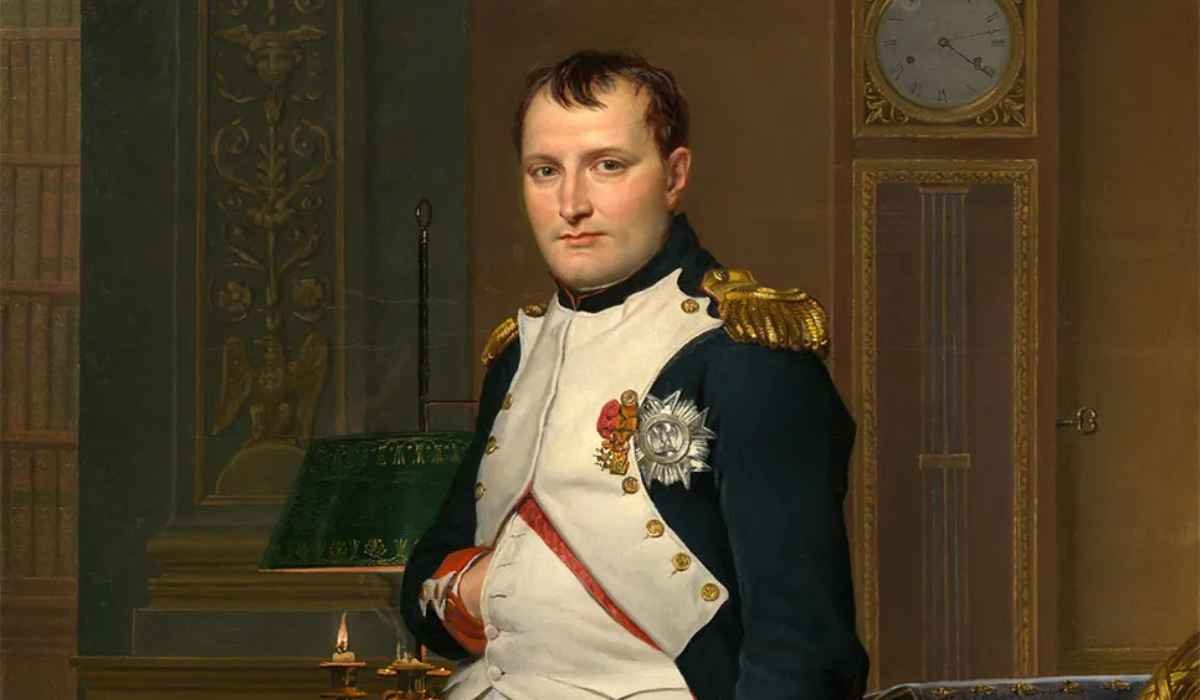
The landscape of European political history, military strategy, and legal reform during the late eighteenth and early nineteenth centuries owes an immeasurable debt of gratitude to the ambitious genius of Napoleon, whose meteoric rise completely transformed the geopolitical reality of the Western world. During a time when the French Revolution plunged the continent into violent chaos and monarchical instability, this remarkable military commander rose to prominence with a mind rooted in tactical brilliance, administrative efficiency, and unyielding personal drive.
By centralizing state power and modernizing governance, he demonstrated that sweeping reforms could be effectively harnessed to create legal frameworks and military doctrines that revolutionized global history. His life remains a guiding light for anyone studying the complex dynamics of leadership and power.
Quick Bio Snapshot
- Full Name: Napoleone di Buonaparte (Napoleon Bonaparte)
- Lifespan: August 15, 1769 – May 5, 1821
- Key Role: Emperor of the French and military strategist
- Major Achievement: Conquered much of Europe and established the Napoleonic Code
Early Life and Military Roots of Napoleon
The journey of Napoleon began in Ajaccio on the Mediterranean island of Corsica, where he was born into a minor noble family of Italian descent. Sent away to military academies in mainland France as a youth, he faced linguistic teasing and social isolation due to his Corsican accent, prompting him to bury himself in intense academic studies and military history books. These formative years planted the seeds of an iron discipline and an insatiable appetite for artillery tactics. Graduating early from the prestigious École Militaire, he embraced the revolutionary fervor sweeping the nation, launching a prolific military career centered around strategic brilliance and battlefield audacity.
Artillery Successes and the Siege of Toulon
Military prominence arrived for Napoleon when he secured his first major battlefield breakthrough during the Siege of Toulon in 1793. Capitalizing on royalist forces handing the strategic port over to the British Navy, he brilliantly seized commanding high ground and deployed artillery batteries to bombard the enemy fleet, forcing a British evacuation. This decisive victory earned the young officer a promotion to brigadier general at the remarkable age of twenty-four. The strategic competence demonstrated by Napoleon during this campaign caught the attention of the revolutionary government, establishing his reputation as a rising star within the French military ranks.
The Italian Campaign and Military Genius of Napoleon
Brilliant tactical maneuvers characterized the legendary Italian campaign launched by Napoleon against the allied forces of Austria and Sardinia in 1796. Taking command of a demoralized, underfed French army, he inspired troops through charismatic proclamations and swift, aggressive flanking movements that repeatedly shattered numerically superior enemy forces. Securing northern Italy for France, he negotiated peace treaties independently, showcasing early political ambitions. This stunning military triumph cemented the status of Napoleon as a peerless tactical genius, captivating the imagination of the French public and establishing him as a formidable national hero.
The Egyptian Expedition and Scientific Exploration
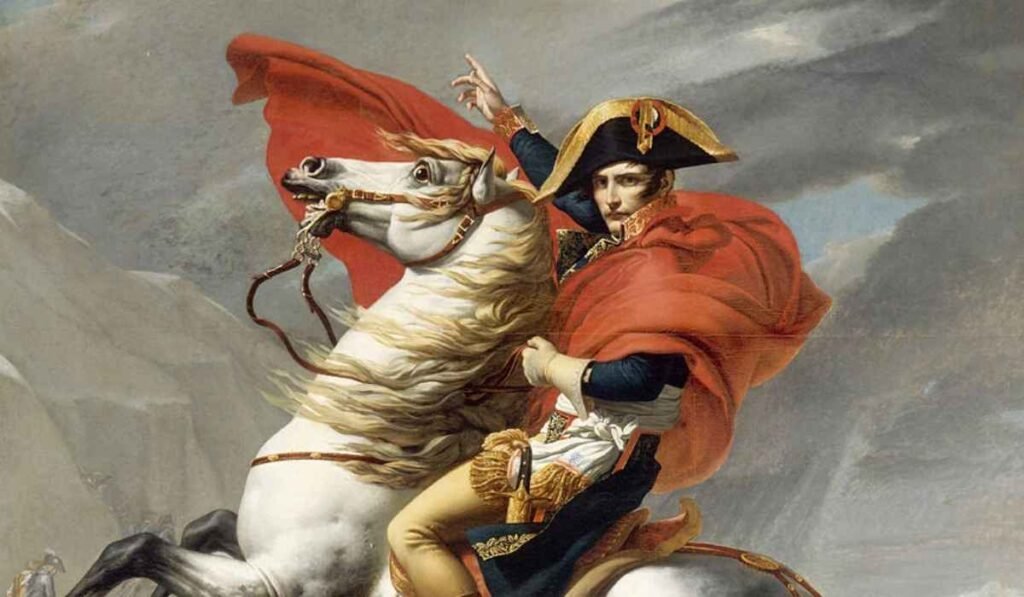
Expanding military horizons took Napoleon across the Mediterranean to Egypt in 1798, aiming to disrupt British trade routes to India and secure French influence in the Middle East. Although the naval fleet suffered a devastating defeat by Admiral Nelson at the Battle of Aboukir Bay, his land campaigns against Ottoman forces demonstrated tactical superiority. Furthermore, Napoleon brought along a massive contingent of scholars, scientists, and artists who discovered the Rosetta Stone, laying the foundation for modern Egyptology. This multifaceted expedition proved that the intellect of Napoleon extended far beyond battlefield combat into cultural and scientific discovery.
The Coup of 18 Brumaire and Political Ascendancy
Political maneuvering reached a dramatic peak when Napoleon returned to France and executed the Coup of 18 Brumaire in November 1799, overthrowing the ineffective Directory government. Establishing the French Consulate with himself as First Consul, he seized absolute executive authority while projecting an image of stability and national unity. By ending a decade of revolutionary bloodshed and establishing domestic order, Napoleon won widespread popular support from weary citizens. This masterstroke of political ambition transformed Napoleon from a successful battlefield general into the supreme political master of the French state.
Establishing the Napoleonic Code and Legal Reforms
Revising the entire legal structure of the nation became the crowning domestic achievement engineered by Napoleon through the creation of the civil legal system known as the Napoleonic Code. Replacing the chaotic patchwork of feudal laws with a clear, rationalized set of statutes, he codified civil rights, religious tolerance, property ownership, and equality before the law for all male citizens. Although flawed regarding women’s rights and colonial slavery, this monumental legal framework spread across conquered European territories. The legislative legacy of Napoleon permanently modernized Western jurisprudence, influencing legal systems globally to this very day.
The Coronation as Emperor of the French
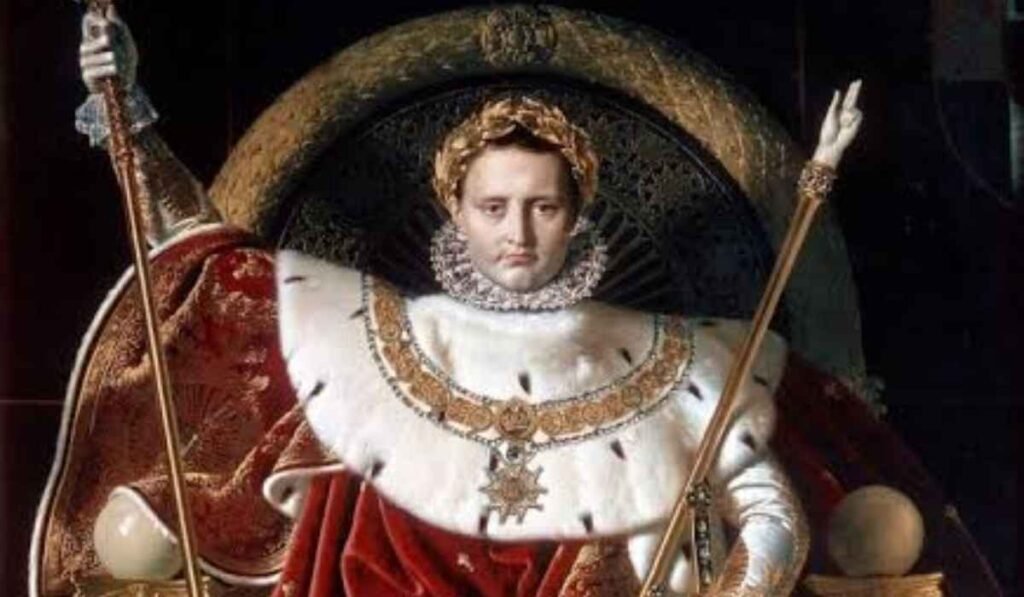
Absolute political dominance culminated in December 1804 when Napoleon crowned himself Emperor of the French at Notre-Dame Cathedral in Paris, famously taking the crown from Pope Pius VII and placing it on his own head. This symbolic act signaled that his legitimacy derived from his own military conquests and national popularity rather than divine right. Transforming the republic into a glittering imperial court, Napoleon created a new nobility based on merit and military service rather than hereditary privilege. This imperial expansion cemented the supreme authority of Napoleon over domestic politics and societal structures.
Brilliant Victories at Austerlitz and Military Dominance
Military supremacy across Europe reached its absolute pinnacle for Napoleon during the Battle of Austerlitz in December 1805, often hailed as his greatest tactical masterpiece. Outmaneuvering combined Russian and Austrian armies through brilliant deception and feigned weakness, he shattered the allied center and secured a crushing victory. This triumph forced the dissolution of the Holy Roman Empire and established French hegemony across central Europe. The battlefield brilliance of Napoleon left rival monarchs awestruck, proving that his Grande Armée was virtually unstoppable when commanded by his direct tactical oversight.
The Continental System and Economic Warfare
Enforcing economic warfare against Great Britain, Napoleon established the Continental System in 1806, a sweeping embargo designed to prohibit all European trade with British merchants. Believing he could starve Britain into submission economically since he could not defeat their navy at sea, he demanded that all allied and conquered European nations comply. However, this rigid blockade caused widespread smuggling, economic hardship across the continent, and bitter resentment among subject populations. The economic overreach demonstrated by Napoleon created severe geopolitical vulnerabilities that ultimately strained his vast empire to its absolute breaking point.
The Peninsular War and Spanish Guerrilla Resistance
Protracted military entanglements severely tested the strategic patience of Napoleon during the Peninsular War in Spain and Portugal starting in 1808. Seeking to enforce the Continental System and secure the Iberian Peninsula, he installed his brother Joseph on the Spanish throne, sparking fierce nationalistic uprisings and brutal guerrilla warfare. Facing relentless ambushes, harsh terrain, and British military support under the Duke of Wellington, French forces bled resources continuously. This draining quagmire demonstrated that the empire of Napoleon struggled profoundly against popular nationalist resistance movements fighting on home soil.
The Disastrous Invasion of Russia
Catastrophic military failure unfolded during the fateful invasion of Russia led by Napoleon in 1812 with an immense multinational Grande Armée of over six hundred thousand men. Seeking to force Tsar Alexander I back into compliance with the trade embargo, he pushed deep into Russian territory, encountering scorched-earth tactics and fierce resistance at Borodino. Entering an abandoned, burning Moscow, Napoleon awaited a surrender that never came. Facing the brutal Russian winter and relentless partisan attacks, the harrowing retreat devastated his forces, destroying the military invincibility previously enjoyed by Napoleon on the European continent.
Defeat at Leipzig and First Exile to Elba
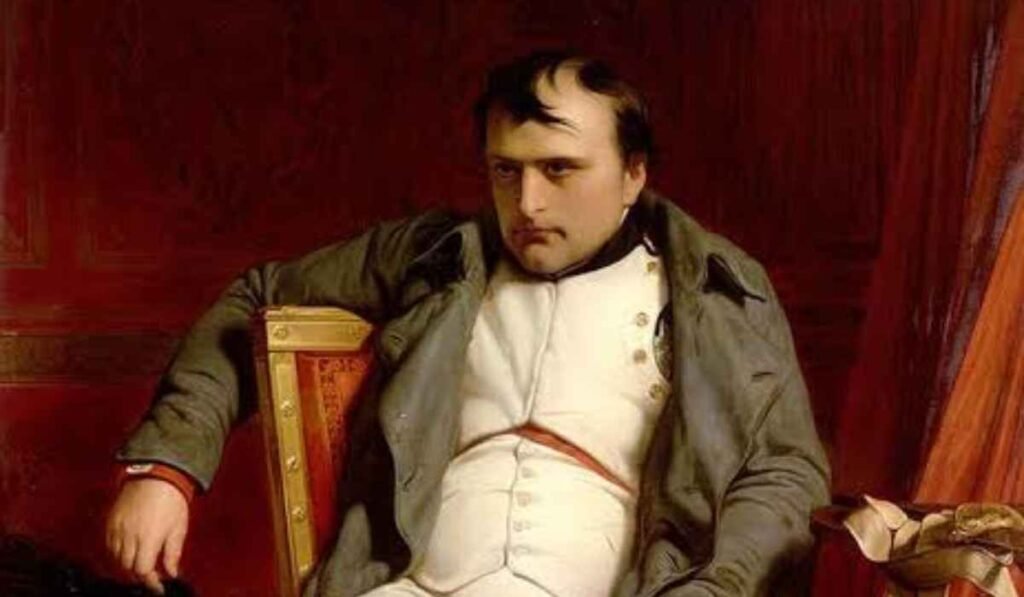
Cascading military defeats culminated in the massive Battle of Leipzig in 1813, where a coalition of European powers decisively defeated Napoleon, forcing him to retreat back into France. As allied armies converged on Paris, internal political betrayal and military exhaustion forced Napoleon to abdicate his throne in April 1814. Exiled to the small Mediterranean island of Elba by the victorious coalition, he retained the title of emperor of the island while the Bourbon monarchy was restored in France. This dramatic downfall marked the temporary conclusion of the imperial reign of Napoleon.
The Hundred Days and Waterloo Campaign
Daring political comebacks characterized the breathtaking escape from Elba executed by Napoleon in March 1815, landing in France and marching triumphantly to Paris without firing a shot as royal troops defected to his side. Ruling for a brief period known as the Hundred Days, he hastily rebuilt his army to face the approaching allied coalition. However, his final military campaign culminated in definitive defeat against the Duke of Wellington and Prussian forces at the Battle of Waterloo in June 1815. This crushing defeat permanently shattered the political ambitions of Napoleon.
Permanent Exile to Saint Helena and Final Years
Final imprisonment awaited Napoleon on the remote, windswept British island of Saint Helena in the South Atlantic Ocean, far from European politics. Guarded heavily by British troops and isolated from his family, he spent his remaining years dictating his memoirs and shaping his historical legacy, portraying himself as a liberal champion of the French Revolution. Despite the bleak surroundings, his sharp intellect and charismatic storytelling remained intact. The final exile of Napoleon marked the quiet twilight of a turbulent life that had fundamentally redrawn the political borders of the entire Western world.
The Declining Health and Passing of Napoleon
The earthly journey of Napoleon drew to a close on May 5, 1821, when stomach cancer claimed his life at the age of fifty-one on the island of Saint Helena. News of his passing plunged France and global political circles into an immediate state of shock, deep mourning, and intense historical debate. His remains were later exhumed and returned to Paris in 1840, entombed magnificently beneath the dome of Les Invalides. The peaceful passing of Napoleon transformed him into an immortalized historical myth, sealing his place among the most debated military commanders in human history.
Global Mourning and Tributes to an Empire Builder
Witnessing the widespread reactions following his passing revealed the profound emotional polarization that Napoleon generated worldwide between ardent admirers and bitter detractors. While British authorities sought to suppress extravagant memorialization, his veterans and supporters mourned his loss deeply across Europe. Monumental tributes and artistic depictions organized decades later cemented his larger-than-life persona. This collective global fascination demonstrated that Napoleon was not just a monarch, but a globally cherished and feared architect of the modern nation-state.
Cultural Impact and Global Legacy
Decades after his death, the cultural impact of Napoleon remains vividly alive in global memory, military academies, legal textbooks, and political science curricula. Monuments, museums, and historical societies established in his honor continue to study his administrative genius worldwide. The strategic blueprint left by his military campaigns changed how modern armies approach logistics, staff work, and rapid maneuver warfare. His enduring message reminds humanity that true political power requires administrative competence, legal order, and an unshakeable ambition to reshape societal norms.
Modern Relevance and Timeless Strategic Teachings
Contemporary political leaders and military strategists frequently look back to the operational model of Napoleon for inspiration when managing large organizations, executing strategic maneuvers, and reforming bureaucratic systems. As new generations navigate complex global crises, the tenacity demonstrated by his career provides a reliable roadmap for turning ambitious visions into structural realities. Honoring his historical memory requires more than nostalgic remembrance; it demands active critical analysis of statecraft, military science, and defending the rule of law just as his legal codes established centuries ago.
Inspiring Future Generations of Global Historians
The ongoing realization of the institutional ideals championed by Napoleon rests heavily upon the shoulders of emerging scholars, lawyers, and historians across the globe. Educational institutions continually introduce young minds to his extensive legal and political reforms, ensuring that the foundational values of meritocracy and administrative efficiency are analyzed deeply. Each individual who studies his tactical brilliance helps fulfill the historical curiosity once embodied by his battlefield commands. The journey toward understanding modern statecraft is continuous, requiring constant dedication and intellectual rigor from everyone who shares an interest in history.
Commemoration and Reflection on His Life
Annual observances and historical retrospectives dedicated to the memory of Napoleon serve as important moments for international self-reflection, encouraging students and scholars to engage in creative historical analysis and political science education. These traditions keep the spirit of nineteenth-century European history alive, transforming archival remembrance into a living movement of active academic contribution. Through these collective efforts, his legacy transcends the history books, manifesting daily in civil law codes, administrative departments, and military doctrines operating around the world.
Conclusion: The Eternal Spirit of Strategic Ambition
Ultimately, the profound impact of Napoleon defies simple categorization, representing a permanent shift in how humanity structures legal systems, military forces, and centralized governments. His unwavering faith in human capability, administrative rationalization, and tactical brilliance continues to fascinate millions across cultural, geographic, and generational divides. As long as people strive for political organization, military excellence, and legal reform, the visionary spirit embodied by Napoleon will forever illuminate the path toward understanding the complex architecture of modern civilization.
Frequently Asked Questions
- Where was Napoleon born?
- He was born on the Mediterranean island of Corsica in the city of Ajaccio.
- What was his greatest legal achievement?
- He established the Napoleonic Code, which modernized civil law across Europe.
- In which famous 1805 battle did he achieve his greatest tactical victory?
- He crushed combined Austro-Russian forces during the Battle of Austerlitz.
- Where was he permanently exiled after his final defeat?
- He was imprisoned on the remote South Atlantic island of Saint Helena.
- When did Napoleon crown himself Emperor of the French?
- He crowned himself emperor at Notre-Dame Cathedral in Paris in December 1804.